Earthworms Shown to Counteract the Harmful Effects of Microplastics on Plants
 Admin
Admin
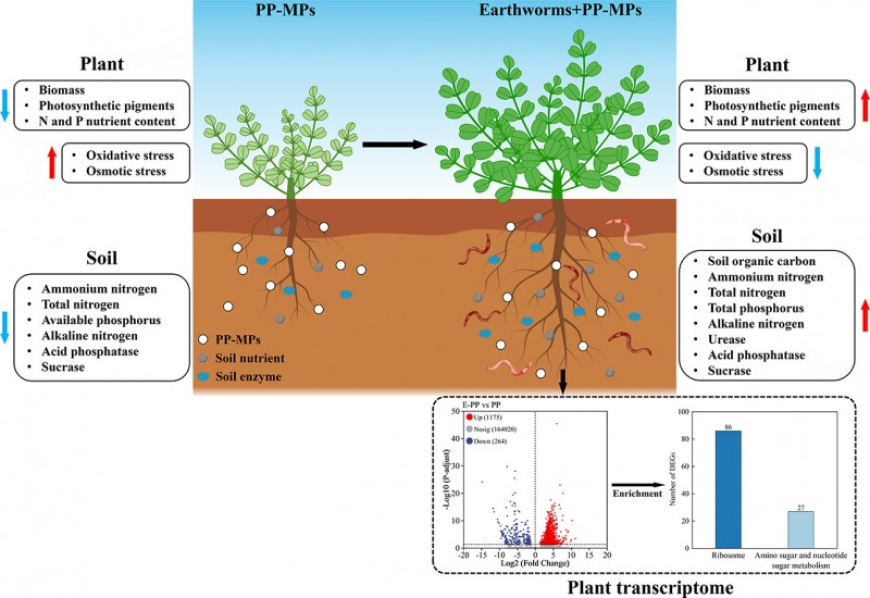
As plastic pollution continues to infiltrate ecosystems worldwide, soil environments are emerging as an overlooked but critical frontier in the battle against microplastics (MPs). The tiny plastic fragments, pervasive in agricultural and natural soils alike, can cling to plant roots, disrupt nutrient uptake, and interfere with metabolic and physiological processes. They also alter soil structure, impact water and nutrient flow, and shift the composition of microbial communities—ultimately compromising plant health and productivity.
Addressing these cascading impacts has proven difficult due to the intricate and dynamic nature of soil ecosystems. However, new research from a team of Chinese scientists, recently published in Environmental Chemistry and Ecotoxicology, offers a promising natural solution. The study reveals that earthworms—often referred to as “ecosystem engineers”—can significantly mitigate the detrimental effects of microplastics on plant growth.
Led by soil ecologist Hailong Wang, the team demonstrated that the presence of earthworms in microplastic-contaminated soils enhances nutrient cycling and organic matter turnover, while simultaneously improving the structure and diversity of soil microbial communities. According to Wang, “Earthworms promote the abundance of microorganisms involved in nitrogen, phosphorus, and carbon cycling, which helps restore essential nutrient pathways disrupted by microplastic pollution.”
The researchers went a step further, uncovering a molecular mechanism underlying this phenomenon. In soils contaminated with MPs, earthworms were found to influence plant gene expression—specifically in Astragalus sinicus L., a key nitrogen-fixing legume used as green manure. The study showed that earthworm activity upregulated genes related to ribosomal protein synthesis in plant roots, thereby enhancing protein production and supporting cellular growth and repair.
“Our findings indicate that earthworms not only improve soil health but also help plants actively adjust to microplastic stress through gene regulation,” says Wang. “This dual biological response—combining soil-level remediation with plant molecular adaptation—could offer new insights into sustainable strategies for mitigating the hidden impacts of plastic pollution in agricultural ecosystems.”
This research underscores the intricate interactions between soil fauna, microbial communities, and plant physiology, suggesting that the humble earthworm may play a far greater role than previously recognized in safeguarding terrestrial ecosystems from the rising tide of plastic contamination.